
Lighted Pathways and Outdoor Living Designs from a Professional Landscape Contractor
Creating inviting and functional outdoor spaces involves more than placing furniture or adding decorative features; it requires a cohesive vision where lighting, structure, and natural elements work together. A thoughtfully designed outdoor environment extends how a property is experienced, offering both visual appeal and practical use long after the sun sets. Lighted pathways, in particular, play a central role in shaping how people move through and interact with a space, while broader outdoor living designs bring comfort and purpose to every corner of a yard. When these elements are aligned, the result is an outdoor setting that feels intentional, welcoming, and highly usable.
Working with a professional landscape contractor introduces a level of planning and design insight that elevates these outcomes. From understanding how lighting affects mood to selecting materials that hold up over time, their approach blends creativity with functionality. A landscape contractor evaluates the unique characteristics of each property, considering layout, climate, and lifestyle needs before developing a cohesive plan. This process transforms standard outdoor areas into refined environments where pathways guide movement, lighting enhances visibility, and living spaces support relaxation and entertainment in equal measure.
Exploring the Impact of Lighting in Landscape Design
Lighting serves as both a functional necessity and a design feature that shapes how outdoor spaces are experienced. Proper illumination allows homeowners to safely navigate pathways, steps, and gathering areas while also highlighting architectural and natural elements. A landscape contractor uses lighting strategically to emphasize focal points such as trees, garden beds, and structural features, creating a layered visual effect that adds depth and dimension. This approach allows outdoor spaces to remain active and visually engaging even after daylight fades.
Beyond visibility, lighting significantly influences atmosphere. Soft, warm lighting can create a calm and inviting environment, while brighter, cooler tones can energize a space or draw attention to specific features. By balancing brightness levels and placement, a landscape contractor creates environments that feel cohesive rather than overly illuminated or uneven. The goal is to guide the eye naturally through the landscape while maintaining a comfortable and visually appealing ambiance.
Lighting design also requires consideration of how natural and artificial light interact. During the day, sunlight defines the layout and highlights textures, while at night, artificial lighting takes over to recreate and enhance those effects. A well-designed system accounts for this transition, maintaining consistency in how the space is perceived. This level of planning results in outdoor environments that feel complete and intentional at all hours.
Selecting the Right Lighting Fixtures and Bulbs
Choosing appropriate lighting fixtures is essential for achieving both design and functional goals. Path lights provide consistent illumination along walkways, while spotlights and floodlights highlight specific features like trees or architectural details. Wall-mounted fixtures add both style and security, and specialty lighting, such as underwater fixtures, can enhance water features with subtle visual effects. A landscape contractor evaluates the purpose of each area before selecting fixtures that align with the overall design.
The type of bulb used also plays a significant role in the outcome. Brightness levels, measured in lumens, determine how much light is emitted, while color temperature influences whether the light appears warm or cool. Warmer tones are often used in relaxation areas to create a welcoming atmosphere, while cooler tones may be applied in task-oriented spaces. A landscape contractor balances these elements to create a cohesive lighting plan that supports both usability and visual appeal.
Energy efficiency and durability are also key considerations. LED bulbs have become a preferred option due to their longevity and reduced energy consumption. Solar-powered lights offer an alternative that minimizes electrical usage, while smart lighting systems provide additional control through automation and scheduling. These choices contribute to lower long-term costs and support environmentally conscious design practices.
Designing Lighted Pathways for Safety and Visual Appeal
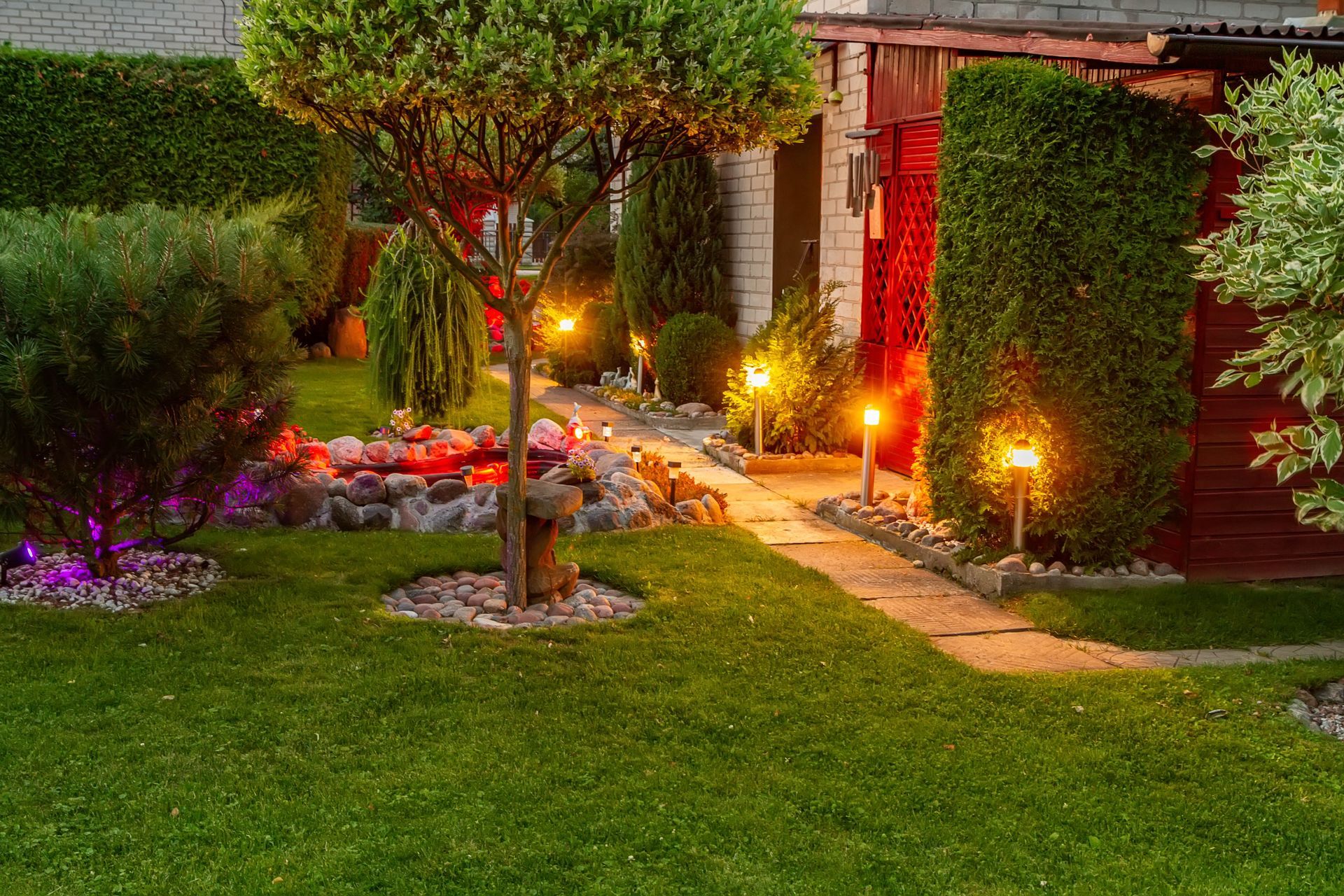
Lighted pathways are one of the most impactful features in outdoor design, guiding movement while enhancing the overall aesthetic. Properly spaced lighting creates a clear and inviting route, reducing the risk of trips or falls and improving accessibility. A landscape contractor carefully plans placement to eliminate dark spots while avoiding excessive brightness that could disrupt the natural feel of the space. The result is a pathway that feels both safe and visually balanced.
In addition to safety, pathway lighting contributes to the overall character of the landscape. The choice of fixtures, materials, and layout influences whether the design feels modern, traditional, or somewhere in between. Subtle lighting integrated along the edges of a path can create a seamless look, while decorative fixtures may add personality and charm. A landscape contractor considers these elements together to create pathways that complement the surrounding environment.
Integrating Lighting with Garden and Landscape Features
Lighting becomes even more effective when it is integrated with plants, trees, and other natural elements. Lighting at the base of trees can highlight the structure, while softer lighting can accentuate flower beds and ground cover. These techniques create contrast and depth, allowing the landscape to take on a dynamic appearance at night. A landscape contractor studies plant placement and growth patterns to determine where lighting will have the greatest impact.
Seasonal changes also influence how lighting interacts with the landscape. As plants grow, shed leaves, or bloom, the way light moves through the space shifts as well. Flexible lighting systems allow for adjustments over time, maintaining effectiveness as the landscape evolves. A landscape contractor plans for these changes, selecting fixtures that can be repositioned or adapted as needed.
The broader landscape industry continues to expand as more property owners invest in outdoor design. According to Landscape professionals.org, the landscape industry employs more than 1 million people and represents 661,000 landscaping service businesses. This level of activity highlights the growing demand for thoughtful, well-executed outdoor spaces, as well as the increasing emphasis on integrating design with functionality in residential environments.
Incorporating Modern Outdoor Living Design Elements
Outdoor living spaces have evolved to include features that mirror the comfort and usability of indoor environments. Patios, kitchens, seating areas, and fire features are now commonly incorporated into landscape designs, creating spaces that support relaxation and entertainment. A landscape contractor approaches these projects with a focus on layout, flow, and usability, ensuring that each element contributes to a cohesive overall design.
Modern materials and construction techniques have expanded what is possible in outdoor design. Weather-resistant materials, sustainable building options, and energy-efficient systems all play a role in shaping contemporary outdoor spaces. A landscape contractor evaluates these options to select materials that align with both design goals and long-term performance. This approach results in spaces that are not only visually appealing but also built to last.
Lighted pathways and thoughtfully designed outdoor living spaces play a significant role in shaping how a property is experienced. From improving safety and visibility to enhancing aesthetic appeal, lighting serves as a foundational element that brings outdoor environments to life. When combined with well-planned layouts, durable materials, and modern features, these elements create spaces that are both functional and visually engaging.
Partnering with a landscape contractor provides the insight and structure needed to bring these ideas together effectively. Their ability to balance design, functionality, and long-term performance leads to outdoor spaces that feel cohesive and purposeful. If you are considering upgrading your outdoor environment, now is the time to explore how professional design and lighting can transform your property. Reach out to a
landscape contractor at D & E Landscaping to start planning a space that reflects your style while enhancing how you live outdoors.
Share On: